


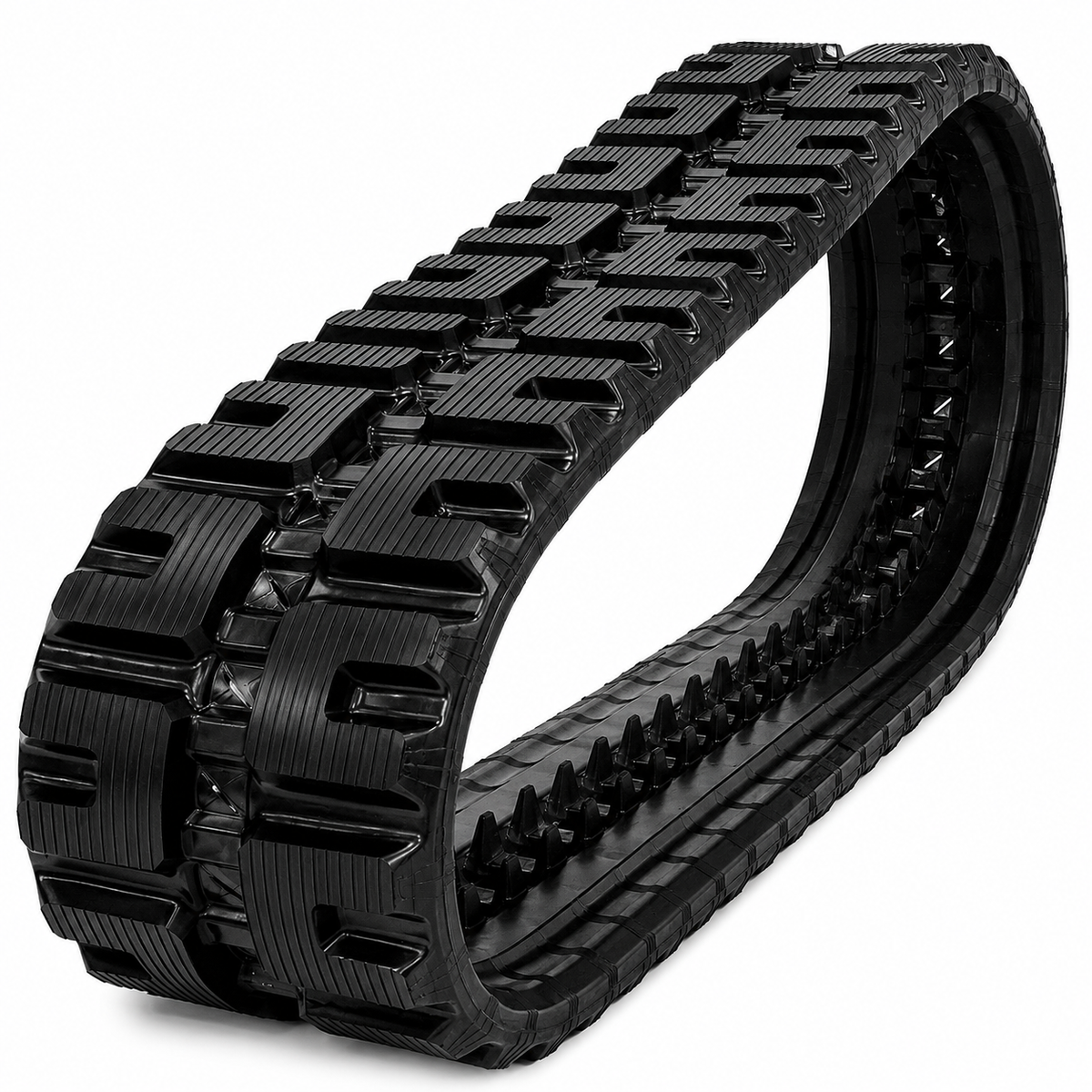
Learn which rubber track wear signs need attention, what to inspect underneath and what to confirm before ordering replacement CTL tracks.
Judge condition rather than hours alone
Replace rubber tracks based on their condition and the manufacturer’s limits, not a promised number of operating hours. Surface, load, operator technique, tension and undercarriage condition change the rate of wear. A track can have usable-looking tread while its internal structure is damaged.
Look beyond the tread blocks
Inspect for deep cuts, exposed reinforcement, missing or damaged drive lugs, separation and serious cracking. Note where damage occurs and whether it is spreading. Lost traction or a change in ride may be a reason to inspect, but neither proves that tracks are the only cause. Stop using the machine when damage makes safe operation uncertain and arrange a qualified inspection.
Check the components the track runs over
Before fitting a replacement, inspect sprocket teeth, idler surfaces and rollers. A damaged or seized component can harm a new track. Uneven damage on one edge also calls for an alignment and operating-condition check. Have the tension system assessed when the track repeatedly becomes loose; simply adding tension is not a diagnosis.
Plan the replacement with the whole machine in mind
Record the size marking, machine identity and current wear on both sides. Ask whether both tracks should be renewed based on manufacturer guidance and the difference in condition. Confirm the quantity on the quote. Schedule the work with suitable lifting equipment and an installer familiar with the machine; the track and tensioning system store substantial weight and force.
Keep evidence for the next inspection
Photograph damage, record machine hours and note the type of work. This creates a useful comparison at the next service. After replacement, use the specified tension-check procedure and inspect again at the intervals in the operator’s manual.
Browse rubber tracks or find parts by machine.
Frequently asked questions
How many hours should rubber tracks last?
There is no reliable universal figure. Working conditions, maintenance and track construction vary, so condition and manufacturer guidance are more useful than an hour target.
Are small surface cracks the same as structural failure?
Not necessarily. Depth, location and progression matter. Have uncertain damage assessed, especially where reinforcement is exposed or rubber is separating.
Can worn sprockets damage new tracks?
Yes. Abnormal engagement from worn or damaged sprocket teeth can harm a replacement track. Inspect the undercarriage before installation.
Must tracks always be replaced in pairs?
Follow the machine manufacturer’s requirements and assess the condition of both sides. A large difference in wear or specification needs review before replacing only one track.
What details are needed for a replacement quote?
Provide the exact model and serial number, complete track marking, photographs and whether you require one track or a pair.
Manufacturer reference: Caterpillar rubber track wear guidance. Use your model-specific operator or parts manual for exact procedures and limits.