


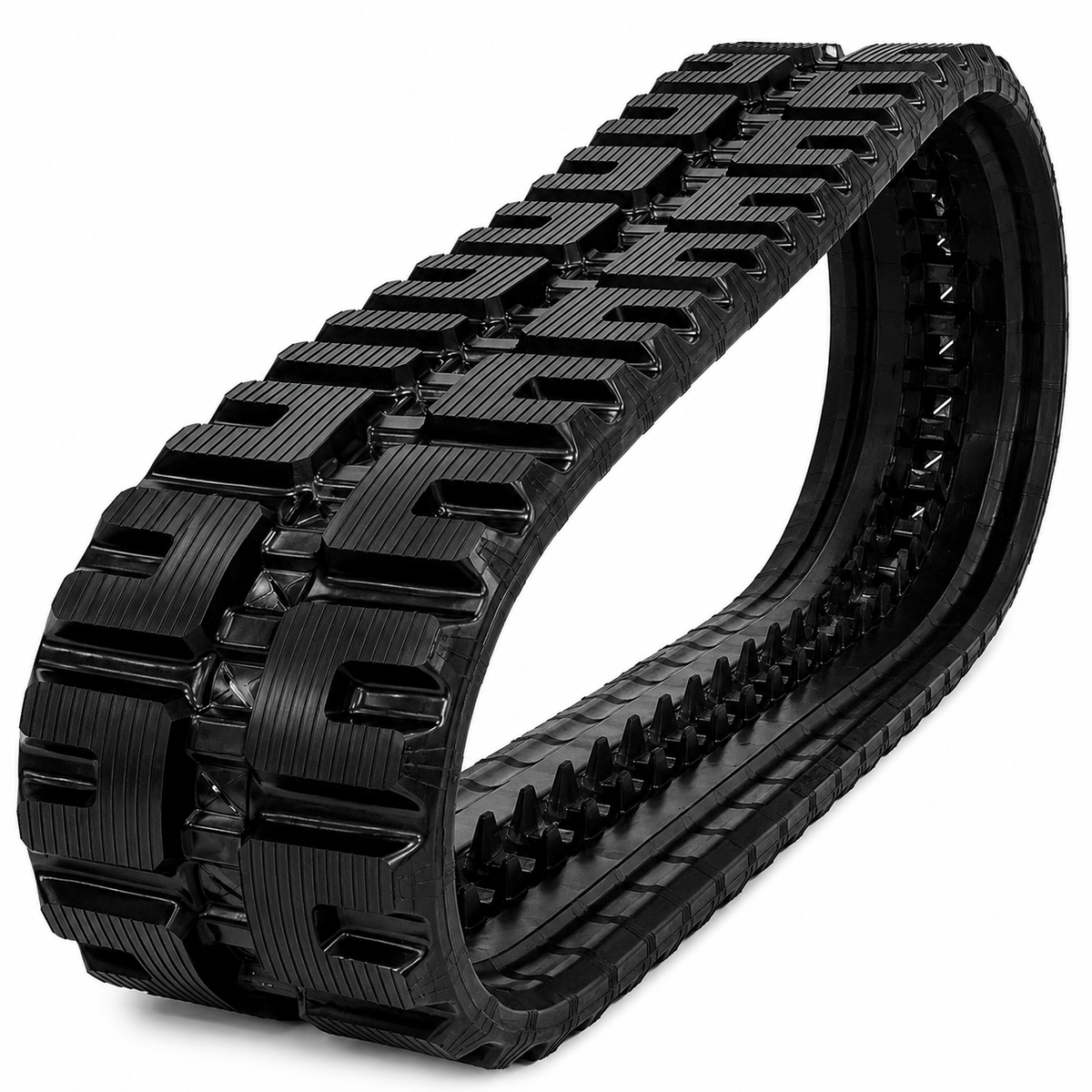
Compare B lug and C lug rubber tracks by fitment, working surface and operating needs before choosing replacement tracks for your CTL.
Start with fitment, then choose the tread
B lug and C lug describe tread options, not a complete fitment specification. First establish the track width, pitch, link count and internal guide configuration required by your compact track loader. A preferred tread is only an option when it is available in the correct specification for your machine.

Compare the actual pattern, not just its letter
Letter names are not a universal performance standard across track suppliers. Look at the actual tread photograph and specification. Consider block size, spacing, the amount of rubber contacting the ground and how the pattern clears material. Ask about the specific construction offered rather than assuming every B or C pattern performs identically.
Match the choice to a normal working week
List the surfaces you travel over most: soil, aggregate, paved access routes or finished landscaping. Include the travel between work areas, not just the place where you load. For mixed work, explain the proportion of each surface to your supplier. Traction, vibration and surface marking all matter; no tread makes sharp demolition debris harmless or guarantees grip on ice.
Use a practical comparison checklist
Compare like-for-like track sizes and confirm that both patterns are approved options for your machine. Ask whether the quoted price is per track or per pair, check the product photograph, and compare the published warranty and availability. If a previous set wore unevenly, investigate tension and undercarriage condition before changing pattern. A different tread cannot correct a seized roller or a worn sprocket.
Before ordering
Photograph the existing size marking and tread, record the machine model and serial number, and describe your working surfaces. Browse the rubber track range below after confirming those details. For installation and tension settings, follow the machine manufacturer’s procedure.
Browse rubber tracks or find parts by machine.
Frequently asked questions
Is C lug always better than B lug?
No. The right choice depends on the specific track design, approved machine fitment and working surfaces. Compare the actual products rather than relying on the letter alone.
Can I change tread pattern without changing track size?
Only if the alternative track has the correct complete specification for your machine, including its internal guide and drive configuration.
Does a more aggressive tread prevent track damage?
No. Sharp debris, incorrect tension and worn undercarriage components can damage any rubber track.
Should both sides use the same tread?
Check the machine manufacturer’s requirements and use a compatible matched setup. Discuss significant differences in wear or tread with your supplier before replacing only one side.
What should I send IPX to choose a pattern?
Send the model, serial number, existing track marking, a tread photograph and a description of your main working surfaces.
Manufacturer reference: Caterpillar track selection guidance. Use your model-specific operator or parts manual for exact procedures and limits.